New York, United States
New hotels in Chinatown, New York
Manhattan's dense, market-and-restaurant-driven Chinatown, bordering the Financial District, Tribeca, SoHo and the Lower East Side: no tracked new opening here yet.
Now open in Chinatown
No verified openings in Chinatown yet.
Coming soon in Chinatown
No confirmed openings ahead in Chinatown for now.
Manhattan's Chinatown sits at the crossroads of Tribeca, SoHo, Little Italy and the Financial District in Lower Manhattan: one of 16 New York neighborhoods this guide tracks as its own page. It's also one of the oldest and largest Chinatowns in the United States, a dense grid of markets, bakeries and restaurants distinct from Queens' larger, more recently established Flushing Chinatown. None of the hotels we currently track has opened inside Chinatown itself; for lodging, see our citywide New York guide.
What to do in Chinatown
For a weekend
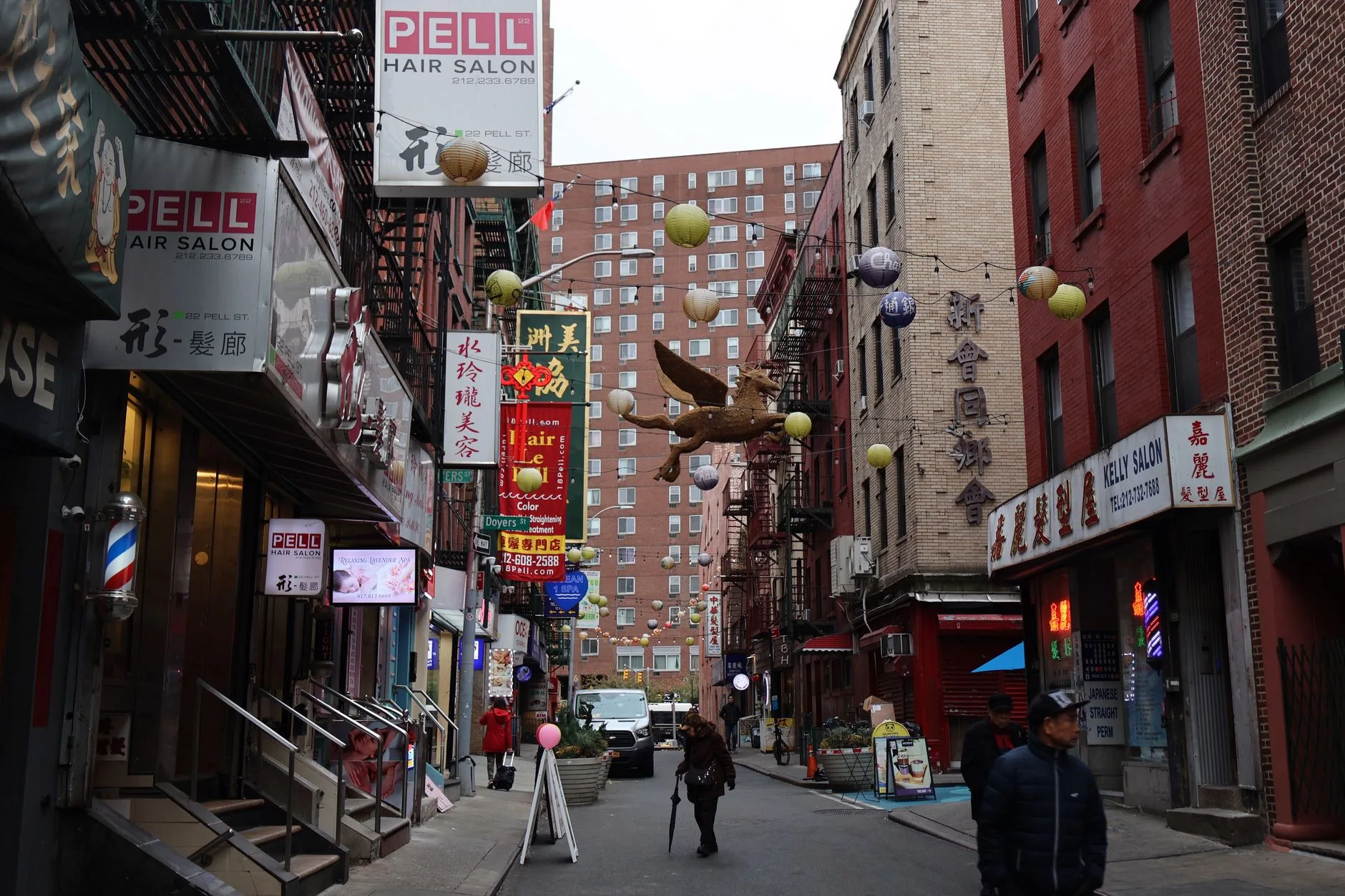
Walk Mott, Mulberry, Pell and Doyers Streets (Doyers, a sharply curved block once nicknamed "the Bloody Angle" for its history of turf disputes between rival community associations in the early 20th century, is one of the oldest surviving street layouts in the neighborhood) for the market stalls, bakeries and restaurants that define Chinatown day to day. Columbus Park, on the site of the former Five Points slum once notorious as one of 19th-century Manhattan's most crowded and dangerous neighborhoods, is where much of Chinatown's older generation gathers for informal mahjong and card games most afternoons: a quiet contrast to the site's rougher past. Stop at the Museum of Chinese in America on Centre Street for context on the neighborhood's history, and at the Kimlau Memorial Arch at Chatham Square, a granite monument honoring Chinese American veterans of the Second World War. A short walk south leads to the neighborhood's Buddhist temples, tucked between produce stands and jewelry shops rather than set apart in a dedicated cultural district. Guided walking tours covering the neighborhood's history, food and architecture run regularly, often starting near Columbus Park or the Museum of Chinese in America, and can add useful context on streets like Doyers and Pell that a self-guided walk might otherwise miss.
For a longer stay
With more time, Chinatown pairs naturally with Little Italy immediately to the north (Mulberry Street's restaurant strip runs directly into it, and the San Gennaro Feast each September spills across the border between the two) and with the Lower East Side to the east, both walkable in a single afternoon. Further east, past Chatham Square, the blocks around East Broadway and the Manhattan Bridge overpass hold a distinct, more recently arrived Fujianese community, with its own bakeries, noodle shops and the intercity bus terminals that once made this stretch famous for cheap fares up and down the East Coast. Manhattan Bridge's pedestrian and bike path also starts near this edge of the neighborhood, offering a direct, elevated walk into Brooklyn for anyone wanting a longer afternoon outing. The neighborhood also sits within easy reach of City Hall Park and the Brooklyn Bridge's Manhattan-side entrance, both a short walk south, making a Chinatown afternoon easy to combine with a Financial District or Brooklyn Heights itinerary on the same day. That same Manhattan Bridge pedestrian path crosses directly into DUMBO and Brooklyn Heights, giving Chinatown a genuinely car-free route across the river that few other Manhattan neighborhoods can match this directly.
A history shaping the neighborhood today
Chinatown's roots trace to the mid-19th century, when Cantonese immigrants arriving via Pacific steamship routes settled around Mott and Pell Streets, then a small enclave within a larger, rougher Five Points district. The Chinese Exclusion Act of 1882 froze the neighborhood's growth and skewed its population heavily male for decades, a "bachelor society" that only began to change after the Immigration and Nationality Act of 1965 reopened large-scale immigration from China and set off Chinatown's major postwar expansion. A second wave, largely from Fujian province, arrived from the 1980s onward and settled mainly around East Broadway, giving that stretch its own distinct culinary and commercial identity within the wider neighborhood. Garment manufacturing was historically one of the neighborhood's largest employers, and community and family associations founded generations ago still operate storefronts and meeting halls throughout the area today: many of them clustered around Mott and Mulberry Streets, alongside the newer arrivals from Fujian further east. That garment industry has largely declined since the 1990s as manufacturing moved overseas, and the storefronts it once filled have gradually turned over to restaurants, bakeries and other small businesses instead. Unlike SoHo and Tribeca just to its west, Chinatown has largely resisted large-scale redevelopment, keeping much of its low-rise, tenement-era building stock even as property values across Lower Manhattan have climbed around it: a contrast visible simply by walking from Chinatown's narrow, market-lined blocks into SoHo's cast-iron facades a few streets away. The neighborhood's proximity to the World Trade Center site also left it more affected than most of the city by the aftermath of September 11, 2001: street closures and a sharp drop in foot traffic hit its restaurants and garment shops hard for years afterward, a slower recovery than wealthier neighborhoods nearby experienced. The Mott and Mulberry Street core reflects that original, largely Cantonese-speaking community most directly, while the newer Fujianese arrivals further east brought their own distinct set of family and community associations, dialects and restaurant styles: two overlapping but genuinely different Chinatowns within the same few square blocks.
Chinatown's food scene
Food is arguably the strongest single reason to visit, and it runs far beyond the dim sum parlors most visitors know first. Cantonese roast meats (barbecued pork, soy-sauce chicken, whole roast duck hanging in shop windows along Mott and Bayard Streets) anchor the neighborhood's oldest restaurants, many still run by the same families that opened them decades ago. Bakeries specializing in egg tarts, pineapple buns and mooncakes (seasonally, around the Mid-Autumn Festival) line the same blocks, alongside congee shops and noodle houses serving both hand-pulled and hand-cut noodle styles. Further east toward Chatham Square and East Broadway, the more recently established Fujianese community has brought its own distinct dishes, hand-pulled Fuzhou-style noodles and fish ball soups among them, giving that end of the neighborhood a noticeably different menu from the Cantonese-rooted core to the west. Fresh produce, seafood and fish markets along East Broadway and lower Canal Street supply much of this, and remain functioning wholesale and retail markets rather than a tourist-facing food hall. Many of the neighborhood's most established restaurants operate on a cash-first, no-frills basis, plastic tablecloths and fluorescent lighting rather than polished interiors, a reflection of a food scene that has always prioritized the cooking over the room it's served in. It's also one of the more affordable places to eat in Lower Manhattan, with everyday restaurant and bakery prices well below those of neighboring SoHo and Tribeca, even as hotel rates in those adjacent neighborhoods run high.
Where to stay in Chinatown
Mott and Mulberry Street core
The market-and-restaurant heart of the neighborhood, and its most tourist-facing stretch, running from Canal Street north toward the Little Italy border: the densest concentration of the roast-meat shops and bakeries described above. No hotel we track has opened here.
Canal Street corridor, toward Tribeca
A slightly quieter pocket where Chinatown's grid starts to give way to Tribeca's wider, warehouse-lined blocks: Canal Street itself is one of the busiest cross-town routes in Lower Manhattan, lined with electronics and souvenir vendors. No hotel we track has opened here either.
Chatham Square & East Broadway
The neighborhood's eastern edge, under the Manhattan Bridge approach: historically the entry point for Fujianese immigration to the city and still its culinary and commercial center, with its own dialects and restaurant scene noticeably different from the Cantonese-rooted core further west. No hotel we track has opened here.
Which hotel for your trip
Chinatown has no hotel of its own on this guide yet, so a visit built around it usually means basing yourself in an adjacent, better-connected neighborhood and treating Chinatown as a day's itinerary rather than an overnight base. Food-focused travelers get the easiest version of this: Tribeca and SoHo both border Chinatown directly, putting its restaurants and bakeries within a 10-to-15-minute walk of hotels in either neighborhood. Travelers prioritizing subway access should look toward Chelsea or Midtown Manhattan, both a straightforward ride from the Canal Street hub, where the N/Q/R/W, J/Z and 6 lines converge, with the Grand Street B/D station covering the neighborhood's eastern blocks. Families and first-time New York visitors are usually better served by a Midtown or Times Square base, using Chinatown as a half-day trip rather than a home base, given how dense, crowded and market-driven its own streets are at peak hours. History-focused travelers timing a visit around the Lunar New Year Parade, which draws large crowds to Mott and Canal Streets each year, should book well ahead in nearby neighborhoods regardless of which one they choose. Photographers drawn to Doyers Street's sharp curve and the neighborhood's dense signage and mural-lined alleys will find it a compact, walkable subject best covered on foot from any nearby base rather than requiring a specific hotel. First-time New York visitors curious about Chinatown specifically should treat it as an excellent half-day or full-day addition to a trip rather than a home base: most do better in a neighborhood with more hotel options and easier subway access, saving Chinatown itself for a focused midday-to-afternoon visit when its markets and restaurants are busiest. Anyone chasing New York's broader Chinatown food scene should also know that Queens has its own, considerably larger Chinatown in Flushing: see our Queens guide for that borough's tracked hotels.
Frequently asked questions
Is there a new hotel in Chinatown?
Not among the hotels we currently track under this specific neighborhood. This page will update as soon as a verified new opening lands here: in the meantime, see our citywide New York guide for what's open elsewhere in the city.
What's the closest tracked hotel to Chinatown?
The nearest current openings sit in Chelsea or Midtown Manhattan, both reachable from Chinatown by subway in roughly 20 to 30 minutes, depending on the specific line and time of day.
Is Manhattan's Chinatown the same as the one in Queens?
No: Queens has its own, considerably larger Chinatown centered on Flushing, distinct from this older, denser Manhattan neighborhood. See our Queens guide for that borough's tracked hotels and openings.
Is Chinatown walkable from the Financial District?
Yes: it borders the Financial District's northern edge directly and is an easy 10-to-15-minute walk from most downtown hotels or attractions, making the two neighborhoods a natural pairing for a single day's itinerary.
What subway lines serve Chinatown?
The Canal Street station is the main hub, served by the N, Q, R, W, J and Z lines, plus the 6 train a few blocks east; the Grand Street station on the B and D lines covers the neighborhood's eastern edge: driving in isn't recommended, given how congested Canal Street gets near the Manhattan Bridge on-ramp.
When is Chinatown's Lunar New Year Parade?
It's held annually, timed to the Lunar New Year itself (typically falling in late January or February), and draws large crowds along Mott and Canal Streets for lion dances, firecrackers and street vendors: worth planning hotel bookings in nearby neighborhoods well in advance of the date.