Otago, New Zealand
New hotels in Dunedin
A university city of about 105,000 people on the Otago Harbour, with a Scottish street grid, a Victorian railway station and an albatross colony on the peninsula next door.
Now open in Dunedin
Dunedin, Otago
Distinction Dunedin Hotel
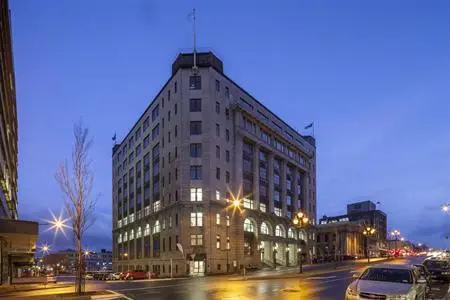
9.2ExcellentDunedin's 1937 Chief Post Office, vacant for two decades, reopened in 2015 as a 127-room hotel whose original mail vaults now serve as private dining rooms.
From NZD 180
Open · 2015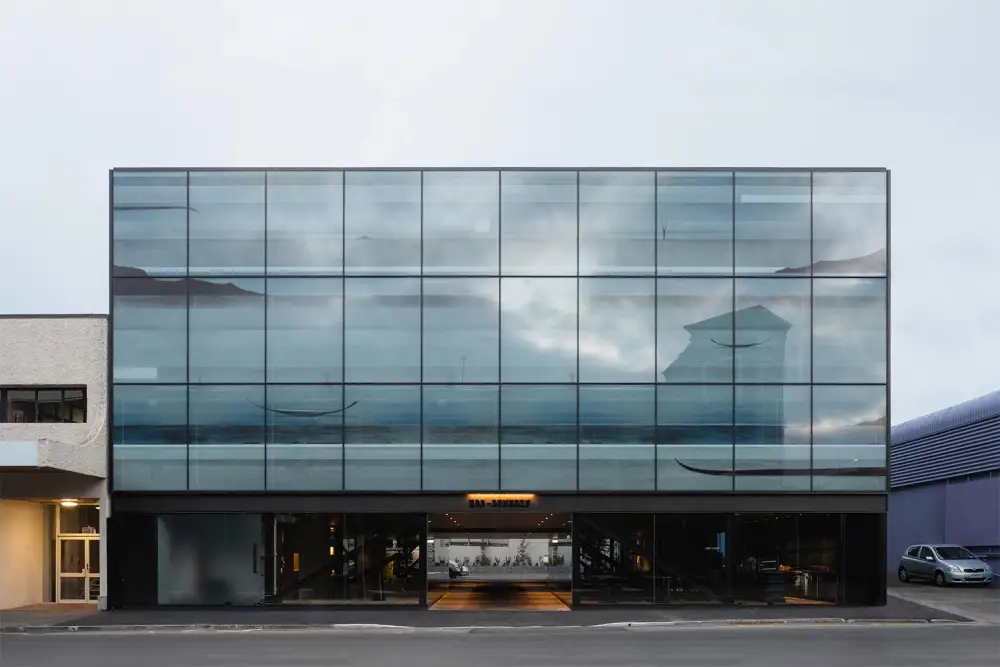
Dunedin, Otago
Ebb Dunedin
9.4ExcellentA family-built, ground-up boutique hotel on Filleul Street in central Dunedin, with an atrium garden and a retractable roof.
From NZD 215
Open · TBCComing soon in Dunedin

Iconic hotels in Dunedin
Dunedin
Fable Dunedin
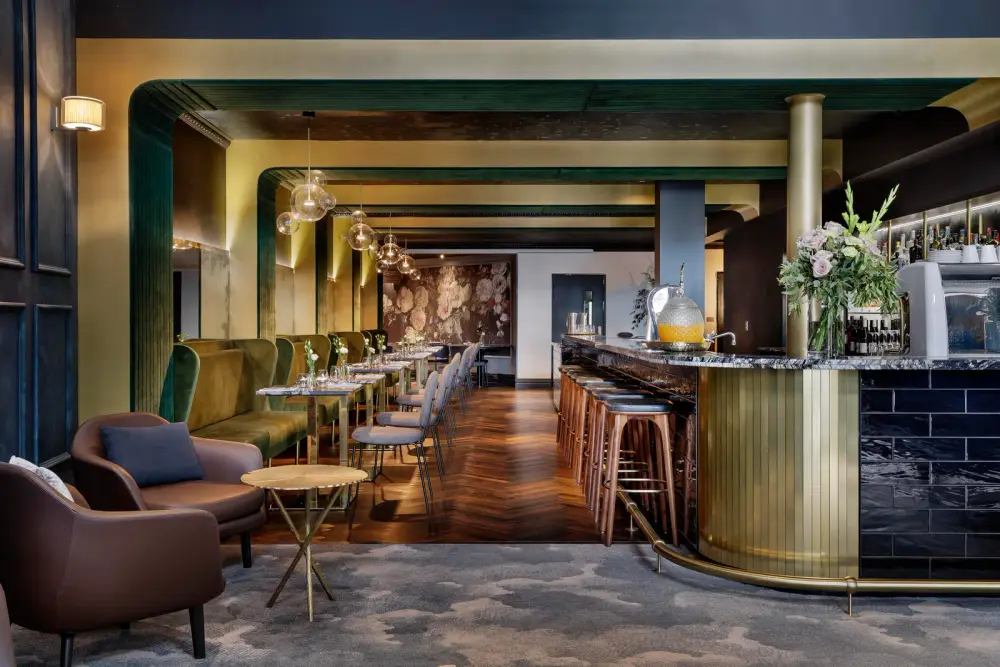
The Italianate building on Princes Street was rebuilt and enlarged from 1878 for the hotel business that Job Wain began in the 1860s, and it resumed trading late the following year. Fable took it over as a boutique hotel of about 50 rooms. Its restaurant, The Press Club, is named after the city's first literary club, formed in the hotel in the 1870s.
Dunedin
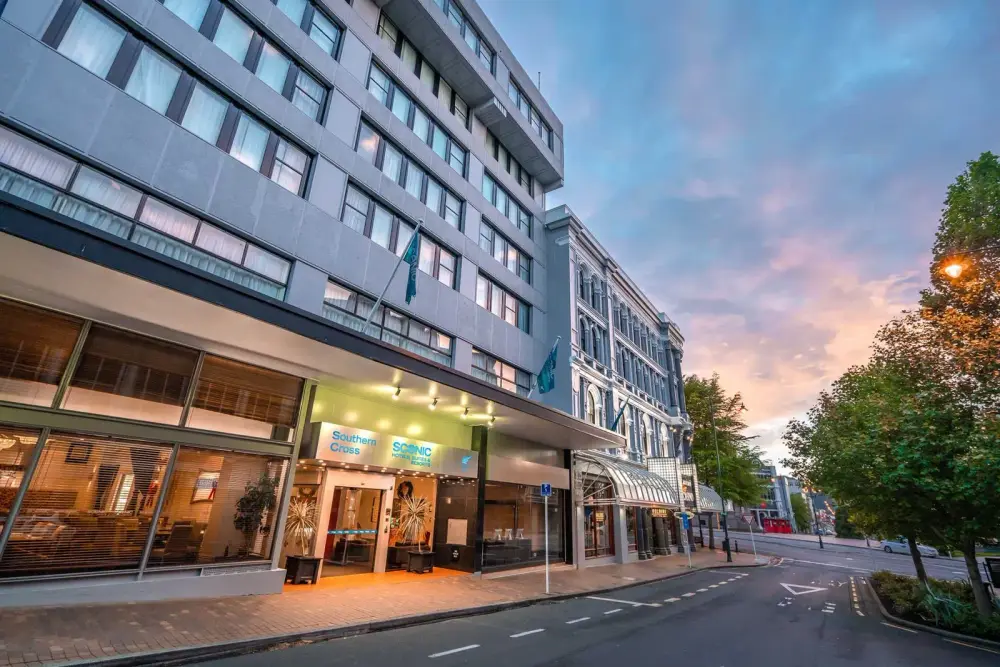
Scenic Hotel Southern Cross
Louis Boldini designed the Grand Hotel, begun in 1883 for the Watson brothers, licensed victuallers who leased the land from the Sidey family. The cost passed £40,000, and Heritage New Zealand lists the building as Category 1. A modern tower now stands beside it, and Dunedin's casino occupies part of the original hotel.
Dunedin
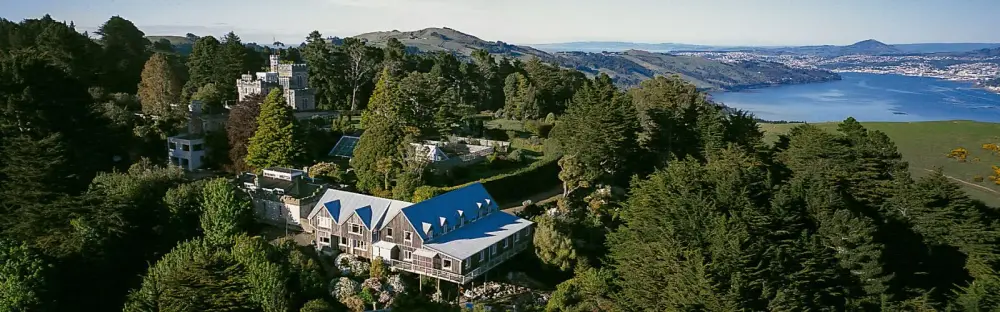
Larnach Castle
William Larnach began building the castle in 1871 for his first wife, Eliza. More than 200 workmen took three years on the shell, and craftsmen spent a further 12 years on the interior. The Barker family has owned it since 1967. Boutique lodge rooms stand in the gardens, and High Tea is served daily in the ballroom.
Things to do in Dunedin
The city is small enough to read in an afternoon. The urban area holds about 104,000 people, a sizeable share of them students at the University of Otago, founded in 1869 and the oldest university in New Zealand. The centre is a compact grid laid out around the Octagon, and nearly everything a visitor wants from the city sits within a twenty-minute walk of it. We follow three hotels here: one open for a few years, one a decade old, and one planned for 2028.
That is a short list, and it tells you something about the city. Dunedin has not had the hotel boom of Queenstown, on the other side of the island. New supply arrives as single conversions of old buildings, and the two Distinction projects are exactly that.
Where the hotels are
Filleul Street, north of the Octagon
Ebb Dunedin stands at 82 Filleul Street, a short walk north of the Octagon. The Cazemier family bought the bare plot in 2017 and built the hotel from the ground up, with the architect Gary Todd drawing it around a central atrium garden. The hotel lists 28 rooms, though one source counts 27, including a two-bedroom suite. It takes adults only, and rates start from NZD 215. We have no firm opening date on record.
The location suits anyone with business at the university: the campus is two minutes on foot, Dunedin Town Hall six. A 24-hour gym next door, Jetts, is free to guests, and the spa partner Well + Being is three minutes away. Parking on site costs from NZ$25 a day. Details are on the Ebb Dunedin page.
The Warehouse Precinct
A different Dunedin begins a few blocks south. The Distinction Dunedin Hotel occupies the former Chief Post Office at 6 Liverpool Street, a 1937 building left vacant for around two decades before Distinction Hotels converted it into a 127-room hotel in 2015. It sits in the Warehouse Precinct, part of The Exchange, the historic business district, within walking distance of the railway station and the Octagon.
The old mail vaults are now The Vaults, private dining rooms off the hotel's restaurant, Parcels. Rooms start from NZD 180, which makes it the cheaper of the two open hotels we track and the larger by a wide margin. Full details are on the Distinction Dunedin Hotel page.
Princes Street
The project to watch is the group's second Dunedin hotel. Plans cover the conversion of Philip Laing House and the former Government Life Building, at the corner of Princes and Rattray Streets, into a 145-room, 4.5-star hotel with a conference centre. The buildings were most recently offices for the Otago Regional Council and Oranga Tamariki. The street facades are to be kept rather than demolished.
The target is 2028. We have no confirmed opening date beyond that year, no rates and no named designer, and a heritage conversion of this size can slip. The page for Distinction Hotel Dunedin will be updated when any of that changes.
Choosing between them
For a quiet stay near campus, at graduation or on a visit to a student, Ebb is the one. It is small, adults only and set a little away from the main commercial streets.
The post office conversion fits a stay built around the railway station, the Octagon and the evening dining of the Warehouse Precinct. It is also the only one of the three with a large room count today, so group bookings land here.
The Princes Street hotel is not yet an option. When it opens, the conference centre will be its distinguishing feature in a city with few large meeting spaces in the centre.
The Octagon and the centre
The Octagon is an eight-sided plaza first laid out in 1846 by Charles Kettle, bisected by George and Princes Streets. The upper half is grassed and terraced and carries an 1887 statue of Robert Burns by Sir John Steell; the poet's nephew, Thomas Burns, was one of the city's founders. St Paul's Cathedral, the Town Hall and the public library occupy the north-western side, the Dunedin Public Art Gallery the south-west, and the Regent Theatre, the city's largest live theatre, the south-east.
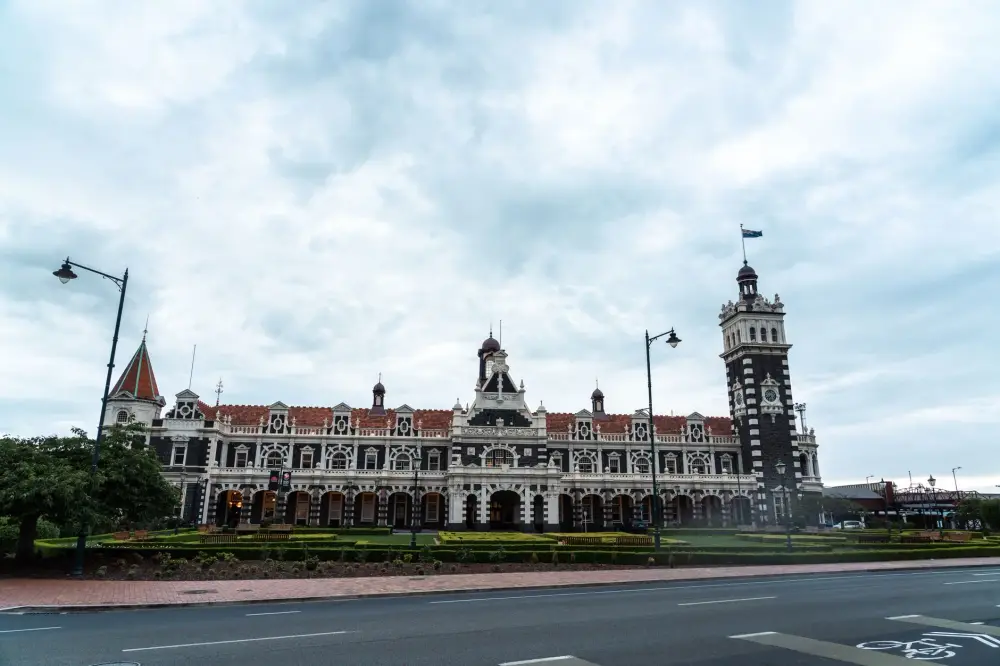
The railway station is the building most people photograph. Opened in 1906 and nicknamed the gingerbread station for its decoration, it is a few minutes' walk from the Octagon. Dunedin Railways runs excursions from it: the Seasider up the coast to Seacliff and the Inlander through the Taieri Gorge to Hindon. The operator is currently on a reduced timetable, so check which trains are running before planning a day around one.
Toitū Otago Settlers Museum, beside the station, covers the city's settlement history. The Otago Museum, which opened in 1868, is a short walk north near the university.
The Dunedin Street Art Trail threads through the Warehouse Precinct and the streets around it, and turns up on gable walls and back lanes rather than in a gallery.
Baldwin Street and the hills
Baldwin Street is in North East Valley, about 350 m long. Its steepest section reaches roughly 1 in 2.9, and the top 161 m climb 47 m. Guinness recognised it as the world's steepest street in 1987, it lost the title in 2019 to Ffordd Pen Llech in Harlech, Wales, and regained it in April 2020 after a ruling that steepness is measured along the central axis. The walk up takes a few minutes and wants decent shoes; it is a short drive from the centre.
Beyond the city: the Otago Peninsula
The Otago Peninsula runs about 20 km parallel to the mainland, nine at its widest, joined to the city by an isthmus roughly 1.5 km across. It forms the south-eastern rim of the extinct Dunedin volcano, and Highcliff Road follows its spine.
At the far end, Taiaroa Head has the only breeding colony of royal albatross on an inhabited mainland, which began to establish itself in the 1920s and is watched from the Royal Albatross Centre. Yellow-eyed penguins and little penguins nest along the coast. Penguin Place protects the yellow-eyed birds, and boat trips along the harbour mouth regularly find fur seals and sea lions.
Sandfly Bay is named for sand blown by the wind, not the insect, and is reached by a path through some of the tallest dunes in New Zealand, around 100 m high. Harbour Cone, a volcanic peak formed 13 to 10 million years ago, has 328 hectares of reserve around it, bought by the city council in 2008. Larnach Castle, built by William Larnach on land at Pukehiki in the 1870s and restored with its gardens, is open to visitors. Olveston, a Victorian-era house in the city, is filled with antiques collected from around the world.
Tunnel Beach, south of the centre, is reached by a hand-cut sandstone tunnel leading down to a sheltered cove, and a short walk back up.
None of the hotels we track is on the peninsula. Staying in the centre means driving the road along the harbour edge, and many of the old ferry services stopped once the land road reached Portobello in 1878.
Students, surf and stadium
The university shapes the calendar more than any festival does. Term time fills the streets around Filleul Street with students; graduation weekends and the start of the academic year are the busiest stretches for rooms near campus, and a small hotel like Ebb will feel that first. Outside term the centre quiets noticeably.
St Clair, on the ocean side of the city, is a well-known surfing beach, and a place for a cold-water walk along the esplanade rather than a swim for most visitors. Forsyth Barr Stadium, a floodlit venue for rugby and cricket, is on the harbour side of the centre; match days push demand up for every hotel in town, so check fixtures before settling on dates. Moana Pool, one of four public pools in the city, is a practical stop for families.
Weather, timing and getting here
The climate is cool for much of the year. The annual mean daily maximum is 14.9 °C, the minimum 7.5 °C, with around 49 frosts a year and average rainfall of about 724 mm. Summer records reach 35.7 °C but are rare; pack layers in any month.
The airport is about 30 minutes from the centre by road. Christchurch, the nearest major international airport, is around four and a half hours away by road, and most overseas visitors arrive that way or connect through Auckland.
The city is also changing. The old Cadbury factory closed in 2018, together with Cadbury World, to make way for a NZ$1.4 billion hospital.
For other places in the country, see New Zealand, Queenstown and Christchurch.
Frequently asked questions
Which hotels are open in Dunedin among those we track?
Two: Ebb Dunedin, a 28-room adults-only boutique hotel at 82 Filleul Street, and the 127-room Distinction Dunedin Hotel in the former Chief Post Office at 6 Liverpool Street, which opened in 2015.
What hotel is due to open next?
Distinction Hotel Dunedin, a planned 145-room conversion of Philip Laing House on Princes Street, is targeted for 2028. No firmer date has been published.
Has Distinction Hotels operated in Dunedin before?
Yes. The group converted the 1937 Chief Post Office into the Distinction Dunedin Hotel in 2015, ahead of this second and larger project.
Is Ebb Dunedin close to the University of Otago?
Yes, it is a two-minute walk from the campus and six minutes from Dunedin Town Hall.
How far is Dunedin Airport from the centre?
About 30 minutes by road. Christchurch is around four and a half hours away.
Is Baldwin Street really the steepest in the world?
Yes, by Guinness's ruling of April 2020, which restored the title after a brief loss to Ffordd Pen Llech in Wales. The maximum gradient is roughly 1 in 2.9.
Is Dunedin a base for the Otago Peninsula?
Yes, though no hotel we track is on the peninsula itself. The albatross colony at Taiaroa Head is at the far end, about 20 km of road from the city edge.
When are rooms hardest to find?
During graduation weekends, the start of the academic year and big rugby or cricket matches at Forsyth Barr Stadium. With only a handful of hotels in the centre, those dates fill early.